Instagram Reel Hooks: The Complete 2026 Library
Every Instagram reel hook resource in one map: the 6 patterns, hooks for 10 niches, hook rate benchmarks, the 3-second data and the competitor workflow.
Tuesday, 11:08am. A founder I work with messages me a Notion link. "I want one place that has every hook resource you've written. I keep losing them in DMs." She wasn't wrong. The hook content was scattered across a dozen posts, each tightly written, none of them working as a map.
This post is the map: the complete 2026 library of Instagram reel hooks. The 6 patterns, hooks for ten niches and two personas, the metric that decides whether your hook landed, the workflow for studying competitors without becoming them, and the data behind the 3-second rule. If you've ever bookmarked a hook resource and then couldn't find it, this is the one.
Read top to bottom on first pass. Each section is short on purpose. The depth is one click away.
TL;DR
Instagram reel hooks in 2026 are decided by 6 structural patterns (contrarian fact, specific scene, number, direct address with a stake, tease and reveal, list promise), applied to your niche's audience anxieties. A hook rate of 50%+ is the entry threshold; below it, the test audience swipes and reels cap near 200 views. Start with the six patterns that win in 2026, then use the niche table below and the hook rate benchmarks to check what's working.
What hooks actually do in 2026
The first 1.5 seconds of a reel decide whether the test audience passes it on. The 3-second mark is when Instagram measures the result. The hook is the structural unit of those first 1.5 seconds (the spoken opener, the visual, the on-screen text), and it's the single highest-leverage variable on your reach.
Two mechanism notes frame everything below:
- Every new reel is tested on a 100–500 person first audience. If enough of it watches past 3 seconds, the reel expands. If not, distribution caps near the test pool size.
- The algorithm reads visual, spoken and on-screen text together in the first 1.5s. A great spoken hook over a static face against a wall fails. A weaker spoken hook over a dynamic visual sometimes still passes.
Almost every hook decision below sits inside one of those two facts.
Section 1: The 6 patterns (start here)
Every hook that wins in 2026 falls into one of six structural patterns. Pattern theory is the foundation; pick yours from this set, then layer everything else in the library on top.
- Contrarian fact: "Most strength coaches train rotator cuff wrong."
- Specific scene cold open: "6:42am. The kitchen smells like coffee."
- Number that demands explanation: "$847,000 is the median amount."
- Direct address with a stake: "If you're 32 and waiting for rates to drop."
- Tease and reveal: "There's one ingredient I removed that fixed 90% of my breakouts."
- List promise: "5 lifts I removed from my own programming."
Each pattern has its own audience-anxiety match and niche fit. The full theory plus 60+ examples is in Instagram Reel Hooks: 6 Patterns That Win in 2026. Read that first, then come back here for the niche and persona slices.
Section 2: Hooks by niche
The pattern is shared infrastructure; the input is what's yours. Niches have different audience anxieties, and that changes which pattern dominates. Here's the one-line version for each niche we've written a dedicated library for:
| Niche | Pattern that dominates | Full hook list |
|---|---|---|
| Fitness | Contrarian fact + mechanism | 40 hooks for fitness coaches |
| Finance and money | Specific number + repeatability | Money and finance hooks |
| Beauty and skincare | Tease and reveal + an observable result | Beauty and skincare hooks |
| Food | Specific scene + technique inside the spell | 42 hooks for food creators |
| Real estate | Direct address with a decision-moment stake | Real estate agent hooks |
| Travel | All six, filtered by content type (destination, budget, itinerary) | Travel creator hooks |
| Gaming | By format: tease and reveal for clips, direct address for tips | Gaming hooks |
| Faceless accounts | Any pattern, as long as the first frame matches the first line | Faceless Instagram hooks |
| Physiotherapy | Contrarian fact that corrects a pain belief | 40 hooks for physiotherapists |
| Nutrition and dietetics | Contrarian myth-bust with an evidence-shaped claim | 42 hooks for nutritionists |
| Lifestyle | Specific scene + a moving first frame | 42 lifestyle reel hooks |
| Fashion | The first frame and first line make the same promise | 44 fashion reel hooks |
| TikTok (any niche) | Depends on format: POV, stitch, green screen, storytime | 44 TikTok hooks by format |
Mix and match within a niche, but don't carry one niche's hook structure into another. A finance-style number hook on a beauty reel reads as off-niche, and the test audience notices before you do. Pick the row closest to yours, adapt five hooks into your voice, and ship.
Section 3: Hooks by audience persona
Niche slices the audience by topic. Persona slices it by who the audience is (solo founder, course creator, therapist, parent), and that changes which structural choices land. Two persona-based libraries:
- 47 hooks for female entrepreneurs across 5 personas (service, coaching, course, lifestyle, humor). Different patterns dominate each persona and the post sorts them: Reels Hooks for Female Entrepreneurs.
- 30 hooks for psychology, attachment and mental-health creators, including the well-being rules that keep these hooks from getting deboosted: Anxious Attachment Reel Hooks.
If your account spans personas (you coach service-business owners and also run a lifestyle account), pick the persona closest to the reel you're about to post, not the one closest to your bio.
Section 4: The metric, hook rate
You can't fix a hook problem you can't measure. Hook rate is the metric that tells you whether your hooks are landing with the test audience.
| Rolling hook rate | Read |
|---|---|
| Below 40% | Broken: the opener fails most viewers |
| 40–50% | Close, still capped |
| 50–60% | Healthy in most niches |
| 60%+ | Top quartile |
The formula, a worked example and the 14-day path above 50% are in Hook Rate, Hold Rate, Completion Rate, along with the full chain from hook to hold to completion.
If your rolling hook rate sits below 50% and you've already audited the openers, the upstream cause is the script itself. That's Section 7.
Section 5: The data, what happens in the first 3 seconds
The "3-second rule" is misnamed. The decision happens by 1.5 seconds; the 3-second mark is just where Instagram records the outcome. Four attributes consistently separate reels that pass the test from reels that fail it: motion in frame 1, on-screen text by frame 4, an opener that names a stake by word 5, and zero "Are you tired of" or "Have you ever wondered" openers.
The full data, the method and what it implies are in The 3-Second Rule on Instagram Reels.
Section 6: The workflow, studying competitors without copying them
The most under-discussed problem in hook strategy: how do you study a competitor's hooks without becoming a copy-paste account? The answer is structural. Every hook has 3 layers:
- Structure: the pattern. Free to copy.
- Intent: what the hook makes the viewer feel. Match it to your niche.
- Voice: rhythm, word choice, cadence. Never copy.
To get a competitor's exact opener, paste their reel into the free Instagram transcript tool: it returns the spoken text, on-screen text and a hook breakdown. The 4-step extraction method and what goes wrong are in How to Steal a Competitor's Hook on Instagram, and the broader research workflow is in Reverse-Engineer Competitor Reels in 9 Minutes.
Section 7: The script layer, the upstream fix
If your hook rate stays stuck below 50% even after the openers are right, the problem isn't the hook. It's the script. AI-pattern scripts produce AI-pattern hooks no matter how careful you are at the surface.
The 4-step humanization framework is in AI Reel Scripts That Don't Sound Like AI: feed the model your past scripts, ban the AI dictionary, force burstiness, and hand-write the opener and the closer. If you're choosing an AI tool to draft scripts, the test of which ones produce voice-matched output is in Best AI Instagram Reel Script Generators: 8 Tested.
Section 8: The action layer, what comes after the hook
The hook earns the watch. The caption earns the behavior: the save, share, DM or click. Pairing a great hook with a generic CTA ("Comment LINK below") wastes the reach.
40 caption templates by intent are in Instagram Reel Captions That Convert. The short version: saves win on "specific later" framing, shares win on naming a specific person, DMs win on a single open-loop question, and link clicks win on a tight stake plus a concrete next step.
When the hook isn't the problem
If you've worked through the library and your reels are still stuck, the cause is upstream of the hook. Three diagnostics:
- Reels capping at 200 views every time: the 200-view jail diagnostic.
- Reach dropped overnight: the 5-check triage guide.
- Reach declining steadily: the 7-point diagnostic.
The hook is the highest-leverage variable. It's not the only one.
How CreatorHouse uses this library under the hood
The library above is the same logic CreatorHouse runs on your competitors' reels. Every hook your tracked accounts post gets tagged by structure, niche fit, intent and hook rate. The output is which 3 hooks to study this week and which patterns are winning in your niche right now, without you doing the tagging.
Frequently asked questions
What's the most important thing about Instagram reel hooks in 2026?
The first 1.5 seconds. The 3-second mark is where Instagram measures, but the viewer decides by 1.5s based on motion, on-screen text and the opening words. Optimize the 0 to 1.5 second window, because anything happening at second 2.8 is too late.
Where should I start in this library if my reels aren't getting views?
Start with the 6-patterns post for the theory, then the niche table above for a list written for your audience. If you already know your hook rate and it's below 50%, go straight to the hook rate benchmarks for the fix path.
How is this library different from the 6-patterns post?
The 6-patterns post is the theory plus 60 examples in one document. This library is the index: it organizes every hook resource (patterns, niches, personas, metrics, data, workflows, captions) by what you'd use it for, with one click to the deeper post. Use the library to navigate and the deeper posts to ship.
Are hook patterns universal or do they differ by niche?
The patterns are universal: the same 6 structures win in fitness, finance, beauty, food, real estate, travel and faceless accounts. What differs by niche is which pattern dominates, as the niche table shows. Pick the pattern that matches your audience's main anxiety, then test it for two weeks.
How often does this library get updated?
Whenever a new hook resource ships. The pattern catalog rarely changes, new niche libraries get added over time, and the metrics and data sections change when the algorithm shifts. The Updates section below is the changelog.
Related guides
- Instagram Reels 2026 Playbook: the broader strategy framework hooks slot into.
- Hook Rate, Hold Rate, Completion Rate: the metrics that tell you whether anything in this library is working.
- Instagram Reels Stuck at 200 Views: what a sub-50% hook rate looks like in distribution.
- AI Reel Scripts That Don't Sound Like AI: the upstream fix when hook rate won't move.
— Salah
Updates
- 2026-09-27: Merged our separate "hooks by niche" post into Section 2 as a niche table covering eight dedicated niche libraries, updated the hook rate links after that guide was consolidated, and added the free transcript tool to the competitor workflow.
- 2026-05-10: Initial publication. Index covers 12 hook-related posts in the 2026 library.
Read more
42 Lifestyle Reel Hooks That Stop the Scroll (2026)
42 lifestyle reel hooks for routines, home, wellness, slow living, city life and budget content, each paired with the first frame that sells it.
42 Instagram Reel Hooks for Nutritionists (2026)
42 reel hooks for nutritionists and dietitians, sorted by content format: myth-busts, grocery hauls, label reads, recipe swaps and client stories.
40 Instagram Reel Hooks for Physiotherapists (2026)
40 reel hooks for physiotherapists, sorted by what patients search: pain myths, desk posture, sports rehab and booking. Plus what not to promise.
Real reels, analyzed
See the full transcript, hook, and shot-by-shot breakdown behind viral reels — then turn any of them into your own script.
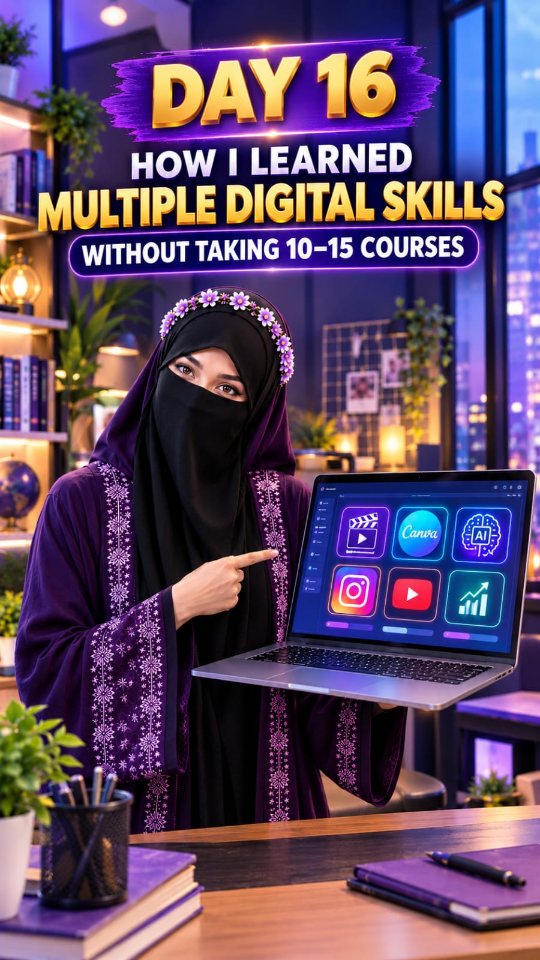 @adswith_nabiya11.1KNabiya Ma'am, ek Secret batao. Aapne itni saari digital skills seekhi kaise? Kya aapne 10-15 courses kiye hain?View breakdown
 @omar.src376.7KHabibi, I am nothing without you. Like a country without police. Like France without Paris. Like a suit without a shirt.View breakdown
 @rupeeraftar217.4Kरियल एस्टेट मार्केट में एक ब्रोकर पैसे कैसे कमाता है और कैसे वह ब्रोकर से इन्वेस्टर इन्वेस्टर से डेवलपर बनता हैView breakdown