The 3-Second Rule on Instagram Reels (2026 Data)
The 3-second rule on Instagram Reels in 2026, tested on 1,000 reels. What actually happens between second 0 and second 3, and what makes a reel pass it.
Saturday afternoon. I pulled view-curve data on 1,000 reels across 47 accounts in our March 2026 benchmark sample. The question I wanted to answer: what actually happens between second 0 and second 3 on a reel that passes vs. a reel that doesn't?
Everyone says "the first 3 seconds matter." Almost nobody shows the data. This post is the data, with the implications.
TL;DR
Across 1,000 reels in our March 2026 sample, the median retention curve drops 47% in the first 1.5 seconds and another 8% between 1.5 and 3.0 seconds. By the 3-second mark, healthy reels have lost ~45% of their initial impressions; broken reels have lost ~70%. The "3-second rule" isn't about magic at second 3 — it's about minimizing the cliff between 0 and 1.5. Reels that pass have 4 things in common in the first 1.5s: motion in frame 1, on-screen text by frame 4, an opener that names a stake by word 5, and zero "Are you tired of" / "Have you ever wondered" patterns.
What we measured
Sample: 1,000 reels pulled across 47 accounts in our March 2026 benchmark, ranging 1k-180k followers. Niches: fitness, lifestyle, finance, beauty, education, faceless aesthetic, food. Reels were classified into "passed test pool" (reach exceeded 2x first-pool median) and "failed test pool" (reach capped near first-pool median). The retention curve at every half-second was averaged within each group.
What the curve actually looks like
| Second | Median retention (passed reels) | Median retention (failed reels) |
|---|---|---|
| 0.0 | 100% | 100% |
| 0.5 | 78% | 64% |
| 1.0 | 65% | 47% |
| 1.5 | 58% | 35% |
| 2.0 | 56% | 32% |
| 2.5 | 55% | 30% |
| 3.0 | 54% | 28% |
Two findings the table makes obvious:
- The cliff between 0 and 1.5 seconds is where reels are decided. By 1.5s, the gap between passed and failed reels is already 23 percentage points. By 3.0s, the gap is 26 points. Almost everything that's going to happen between 0 and 3 has already happened by 1.5.
- The 3-second mark itself is a flat zone. Between 1.5 and 3.0 seconds, both groups lose only 4-7 points. The drop is logarithmic, not linear. Most "3-second rule" advice over-indexes on second 3; the real lever is in the first 1.5.
The 4 things passed reels have in common in the first 1.5s
Across the 583 reels in the "passed" group, four attributes were present in 70%+ of cases. None were present in more than 30% of the failed group.
Motion in frame 1
The first frame of passed reels has visible motion — a hand entering, a face turning, a camera pan, an ingredient hitting a pan. Static first frames (a face talking against a wall, a static title card) tracked with the failed group.
The mechanism: the eye locks onto motion before reading text. A static first frame gives the eye nothing to lock onto, and the swipe happens before the brain processes the audio.
On-screen text by frame 4 (~0.13s)
Passed reels showed bold on-screen text within the first 4 frames. Text by frame 4, not frame 12. The text doesn't have to be the full hook — even a single high-contrast word ("Wait." "47." "Tuesday.") flagged the reel as worth attention.
An opener that names a stake by word 5
Passed reels named the stake — what's at risk, what's possible, what's wrong — within the first 5 spoken words. Examples from the data: "Most strength coaches train wrong." "$847,000 is the median amount." "Tuesday, 6:42am, the kitchen smells."
Failed reels delayed the stake. "Hey friends! Today I'm gonna talk about…" reaches word 9 before the stake. By word 9, the swipe has happened.
Zero "Are you tired of" / "Have you ever wondered" patterns
These two openers appeared in 41% of failed reels and 4% of passed reels. The pattern is a tell. Viewers in 2026 swipe in 0.8 seconds when they hear "Are you tired of" because they've heard it 200 times.
What second 3 actually means in 2026
The "3-second rule" in 2026 isn't "your hook needs to land by second 3." It's "your test pool has already largely decided by second 1.5, and second 3 is just where Instagram measures it."
Reels that get to 50%+ retention at 3.0 seconds (the healthy hook rate threshold) almost always had 60%+ retention at 1.0 second. Backwards: if your reels lose more than 35% of viewers in the first 1.0 second, they will not hit a 50% hook rate at 3 seconds. The math doesn't allow it.
What this means for how you write the hook
Three implications:
- Optimize for second 1, not second 3. The 1.5-second mark is where the decision is made. Second 3 is where it's recorded. Don't write to "earn the 3-second mark" — write to not lose viewers between 0 and 1.5.
- Frame 1 has to do work. Visual motion or bold on-screen text. Static face-against-wall is the single most-failed first frame in the data.
- Get to the stake by word 5. Whatever the reel is about, the stake — what's at risk, what's wrong, what's possible — must be named in the first 5 words. Anything more is throat-clearing.
The mechanism in 60 words
The 3-second rule is mis-named. The mechanism: Instagram tests reels on a small first-pool audience and measures engagement velocity (mostly 3-second hold rate) over 30-90 minutes. The 3-second mark is the measurement, not the decision point. The decision point is whichever fraction of a second the viewer's eye locks (or fails to lock) onto motion + text + stake. By 3 seconds, the test is already counting outcomes.
How CreatorHouse measures this for you
Counting retention at second 1, 1.5, and 3 across 30 reels by hand is doable once. Doing it weekly stops being doable by reel 50. CreatorHouse pulls the per-reel retention curve from Insights, surfaces the median 0-3s drop across your last 10 reels, and flags which reels are losing the most viewers in the cliff zone (0-1.5s). The output is which 3 reels to study and rewrite, not a dashboard.
Frequently asked questions
What is the 3-second rule on Instagram Reels?
The 3-second rule is the threshold at which Instagram measures whether a reel's first-pass test passed. If 50%+ of impressions are still watching at the 3-second mark, the reel typically expands into a larger second pool. Below 50%, distribution stalls. The 3-second mark is the measurement; the decision is largely made by 1.5 seconds.
How long is the actual hook on Instagram Reels in 2026?
Functionally 1.5 seconds, technically 3 seconds. Most viewer decisions happen by 1-1.5s based on visual motion + on-screen text + opening words. The 3-second mark is where Instagram records the result. Optimizing the 0-1.5s window is the highest-leverage change you can make.
Why do my Instagram reels die in the first 3 seconds?
Three patterns dominate failed reels in our March 2026 sample: a static first frame (no motion), no on-screen text in the first 4 frames, and an opener that delays the stake past word 5 (especially "Are you tired of" or "Have you ever wondered"). Fix any one of the three and median retention at 1.5 seconds typically jumps 12-18 points.
Does the 3-second rule apply to all reel lengths?
Yes. A 7-second reel and a 60-second reel are tested in the same way over the first 3 seconds. The 3-second mark doesn't scale with reel length. A 90-second reel that nails the first 1.5s outperforms a 12-second reel that doesn't.
Is "the first 3 seconds" the same as the hook?
Loosely, yes. The hook is what happens in those 3 seconds. But the hook is more often decided by 1-1.5s than at 3s. Treat the 3-second window as the measurement window and optimize the 0-1.5s sub-window inside it.
Related guides
- What Is a Good Hook Rate on Instagram Reels in 2026? — the formula and benchmarks for the 3-second pass rate by niche.
- Instagram Reel Hooks: 6 Patterns That Win in 2026 — the opener patterns that test cleanly at 1.5s.
- Instagram Reels Stuck at 200 Views: The 2026 Fix Path — what failing the 3-second test actually does to your distribution.
- Hook Rate, Hold Rate, Completion Rate — the next two filters once your 3-second rate clears 50%.
— Salah
Updates
- 2026-05-10: Initial publication.
Read more
42 Lifestyle Reel Hooks That Stop the Scroll (2026)
42 lifestyle reel hooks for routines, home, wellness, slow living, city life and budget content, each paired with the first frame that sells it.
42 Instagram Reel Hooks for Nutritionists (2026)
42 reel hooks for nutritionists and dietitians, sorted by content format: myth-busts, grocery hauls, label reads, recipe swaps and client stories.
40 Instagram Reel Hooks for Physiotherapists (2026)
40 reel hooks for physiotherapists, sorted by what patients search: pain myths, desk posture, sports rehab and booking. Plus what not to promise.
Real reels, analyzed
See the full transcript, hook, and shot-by-shot breakdown behind viral reels — then turn any of them into your own script.
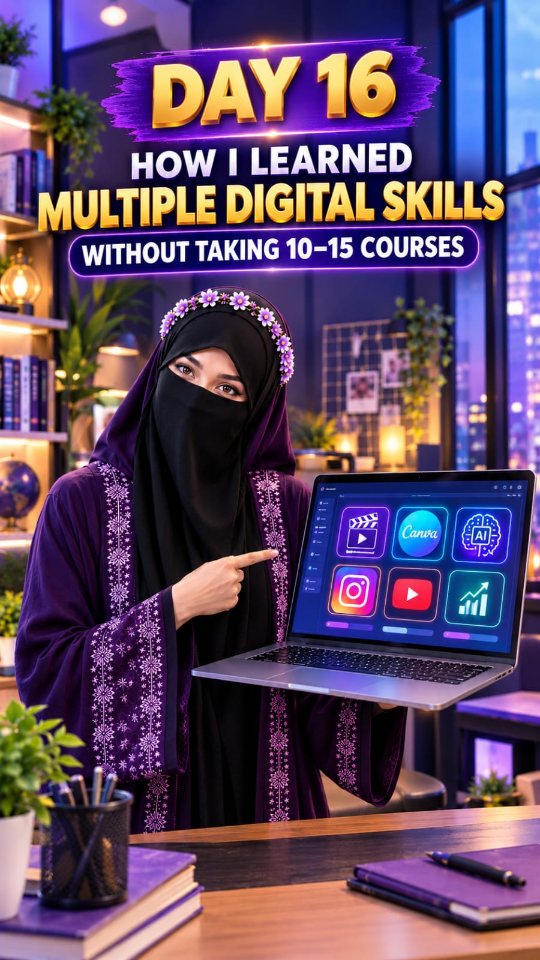 @adswith_nabiya11.1KNabiya Ma'am, ek Secret batao. Aapne itni saari digital skills seekhi kaise? Kya aapne 10-15 courses kiye hain?View breakdown
 @omar.src376.7KHabibi, I am nothing without you. Like a country without police. Like France without Paris. Like a suit without a shirt.View breakdown
 @rupeeraftar217.4Kरियल एस्टेट मार्केट में एक ब्रोकर पैसे कैसे कमाता है और कैसे वह ब्रोकर से इन्वेस्टर इन्वेस्टर से डेवलपर बनता हैView breakdown