AI Instagram Caption Generators: Which Write Captions That Convert (2026)
Most AI Instagram caption generators write fluent copy that performs poorly. Here's the framework to find one that actually drives saves, DMs, and reach.
Every roundup of "best AI Instagram caption generators" gives you the same thing: a logo grid, a pricing table, and a feature checklist. None of them ask the only question that matters: does the caption make someone stop, save, comment, or DM? That gap is why creators run tools for 30 days and still watch their reach flatline.
I built CreatorHouse partly because I kept hitting this exact wall. An AI caption generator would hand me something fluent and utterly inert. No tension, no call to act, no reason for the algorithm to push the post further. The problem isn't that these tools are bad writers. It's that they're optimizing for the wrong output.
This post is a tool-to-tool comparison, but the frame is conversion intent. Before we get to the comparison table, I'm going to give you the framework I use to evaluate any AI caption generator so you can run the same test yourself.
TL;DR
Most AI Instagram caption generators produce grammatically correct captions that perform poorly because they don't account for the four conversion signals Instagram actually measures: saves, shares, DM replies, and profile visits. The Caption Conversion Stack (defined below) is the framework for evaluating any tool. For templates you can adapt immediately, see Instagram Reel Captions That Convert: 40 Templates. For script generation at the Reel level, the Best AI Instagram Reel Script Generators comparison covers that adjacent workflow.
Why "good writing" isn't the benchmark
Instagram's ranking system doesn't read your caption. It reads behavior. A caption that earns 200 saves signals "people want to revisit this" and gets pushed to more non-followers. A caption that earns 40 DMs signals a conversation the algorithm can't fully index, and rewards with distribution anyway. A caption that earns zero saves, shares, or replies, even if it's 280 beautifully crafted words, is invisible to the ranking system after the initial test audience.
The Instagram Reels 2026 Playbook covers this signal hierarchy in detail. What I want to focus on here is what it means for caption tools specifically: the right output is a caption that creates a reason to act, not just a reason to read.
That's a fundamentally different design requirement. And most tools aren't built around it.
The Caption Conversion Stack (the framework)
I call this the Caption Conversion Stack. It's five layers, each one a question you ask about any caption a tool generates. A tool that consistently produces captions hitting four or five of these layers is worth paying for. A tool hitting two or fewer is a template wrapper.
Layer 1: The tension sentence. Does the first line of the caption introduce a gap between where the reader is and where they want to be? Tension pauses the thumb because unresolved problems demand closure.
Layer 2: The save trigger. Is there something in the caption worth returning to later? A specific number, a named framework, a step-by-step, a checklist. People save content they intend to use, not content they admire.
Layer 3: The share bridge. Does the caption include a sentiment, a result, or a relatable situation specific enough that a reader thinks "my friend needs to see this"? Generic aspirational copy fails this layer every time.
Layer 4: The DM bait. Does the caption ask a question or make a claim specific enough to provoke a reply? "What do you think?" fails. "Tell me which one you'd pick and I'll DM you the full breakdown" works because it's concrete and promises a return value.
Layer 5: The profile hook. Does the caption give a non-follower one sentence of context about who you are and why they should follow? This matters especially for Reels that hit Explore.
Most AI caption generators reliably produce Layer 1 copy. Maybe Layer 2 if you prompt carefully. Layers 3 through 5 are almost never built into default outputs.
How I tested each tool
I ran the same five inputs through each tool: a fitness transformation post, a finance tip Reel, a product demo, a "day in the life" vlog, and a faceless educational clip. I scored each output against the Caption Conversion Stack (0 or 1 per layer, max 5). I also noted whether the tool let me specify a conversion goal (save, share, DM, click) and whether the output varied meaningfully by goal.
I'm not naming tools to trash them. The table below groups them by what they actually optimize for, so you can match the right tool to your workflow.
The comparison table
| Tool Category | Default Output | Conversion Stack Score (avg) | Specify Goal? | Best For |
|---|---|---|---|---|
| General LLM (ChatGPT, Gemini raw) | Fluent, neutral, no CTA | 1.8 / 5 | Yes, with manual prompting | Creators who can write their own prompts |
| Caption-specific SaaS (most roundup tools) | Hashtag-heavy, vibe-matched | 2.1 / 5 | Rarely | Quick drafts, lifestyle niches |
| Social copy tools (Jasper, Copy.ai) | Brand-voice consistent | 2.4 / 5 | Sometimes | Brands with established tone guides |
| Reel-native tools (CreatorHouse + script generators) | Hook-aligned, goal-specific | 3.9 / 5 | Yes, built-in | Creators optimizing for reach and conversion |
A score of 2.1 means the average caption from a caption-specific SaaS hits about one layer reliably (tension) and partially hits a second (save trigger, if you're lucky). A score of 3.9 means the output almost always has tension, a save trigger, and a DM hook, with the share bridge appearing in roughly 70% of outputs.
The gap isn't raw writing quality. General LLMs write beautifully. The gap is that reel-native tools are trained on content that performed, not just content that read well.
What the best-performing captions in 2026 actually look like
Here's the thing: the structural difference between a 2.1 caption and a 3.9 caption is usually one sentence. The weaker output ends. The stronger output adds a specific, concrete ask that creates a loop the reader has to close.
Weak (Layer 1 only):
"Working out at 5am felt impossible until I changed one thing. Your consistency is everything."
Strong (Layers 1, 2, 4):
"Working out at 5am felt impossible until I changed one thing: I stopped treating it as a habit and started treating it as a bill. You don't skip bills. Drop a 🧾 below if you need to steal this reframe — I'll send you the full 3-step mindset script."
The second version has a named concept ("treat it as a bill"), a save trigger (the reframe is specific enough to return to), and explicit DM bait with a return value. Same topic, two minutes more editing, meaningfully different behavior.
This is the manual workflow. You can do it. It takes discipline and about 15 to 20 extra minutes per caption once you know the Stack. The cost compounds fast when you're posting five or more times a week.
Where raw ChatGPT actually fails (and it's not what you think)
People assume ChatGPT fails at captions because it "sounds like AI." That's not the core problem. The core problem is that ChatGPT's default is to resolve tension. It opens with a problem and immediately answers it in the same caption, which kills the loop that drives saves and DMs. You have to explicitly prompt it to leave the loop open.
If you do use a general LLM, the single most important instruction is: "Do not resolve the tension in the caption. Leave one specific question or result for the comment or DM." That instruction alone can move a raw ChatGPT output from a 1.8 to a 2.8 on the Conversion Stack.
For a full breakdown of where ChatGPT wins and loses in the broader scripting workflow, ChatGPT for Instagram Reel Scripts: Where It Wins, Where It Fails covers the territory well.
The 5-step workflow for generating conversion captions manually
If you're not ready to pay for a tool, here's the exact process to run in any free AI:
- Feed the context block. Paste: niche, post goal (save/share/DM/click), hook you used in the Reel's first 3 seconds, one sentence about who your audience is.
- Specify the save trigger. Tell the AI: "Include one specific named concept, number, or step the reader will want to return to."
- Block the resolution. Tell the AI: "Do not answer the main question in the caption. Leave it open."
- Add the DM hook. Tell the AI: "End with a concrete ask that promises a specific return value (e.g., DM me X and I'll send you Y)."
- Layer check. Before posting, run the Caption Conversion Stack mentally. If fewer than three layers are present, edit the weakest one (usually the share bridge) before publishing.
This workflow takes roughly 12 minutes the first few times. It drops to 5 minutes once it's muscle memory.
When a caption tool isn't enough
A caption doesn't exist in isolation. If your Reel hook isn't stopping the scroll in the first 1.5 seconds, no caption saves it. The algorithm tests new Reels on an audience of 100 to 500 people, and if roughly 60% or more swipe away before the 1.5-second mark, reach is capped before the caption gets a chance to do anything.
Understanding hook rate and hold rate benchmarks is the prerequisite to knowing whether your caption problem is actually a caption problem. Sometimes the Reel just isn't earning the right audience to whom the caption speaks.
And if you want to know what captions are working for competitors in your niche right now, the most underused workflow is pulling their top-performing Reels, transcribing them, and reading the captions alongside the view counts. You can do that with /tools/instagram-transcript in about four minutes per account.
Frequently asked questions
What makes an AI Instagram caption generator good for conversion?
A good generator accounts for save triggers, share bridges, and DM hooks, not just readable prose. The best tools let you specify a conversion goal (save, share, DM, click) before generating and produce outputs that leave a loop open for the reader to close. Tools that don't let you set a goal tend to output neutral copy that earns reads but not actions.
Can I use ChatGPT as a free AI Instagram caption generator?
Yes, but you need to constrain it manually. ChatGPT's default is to resolve tension in the caption, which kills saves and DMs. Add explicit instructions to leave one question or result open, include a named concept worth saving, and end with a DM hook that promises a return value. With those constraints, a free ChatGPT session can produce 3-out-of-5 Conversion Stack captions reliably.
How long should an AI-generated Instagram caption be in 2026?
For Reels, the caption's first line is the only line visible before the "more" tap, so that line must carry the full weight of the save/share/DM trigger. The remaining body can run 80 to 200 words without hurting reach. Captions under 40 words rarely have room for both a save trigger and a DM hook, so brevity for its own sake is usually a mistake.
Does the Instagram caption affect the algorithm directly?
Instagram's ranking system doesn't semantically parse captions the same way a search engine reads text. What it measures is the behavior the caption generates: saves, shares, comments, DMs, and profile visits. A better caption produces more of those signals, which expands distribution. The caption affects the algorithm indirectly, through human behavior.
Should I use the same AI caption generator for Reels and static posts?
Reels and static posts need different save triggers. Reels captions often reference something visual ("pause at 0:18 for the breakdown"), which creates a watch-again loop. Static post captions rely entirely on text to earn the save. A tool that generates both interchangeably, without asking the format, is treating them as the same problem. They're not.
Running a five-layer check on every caption by hand is the right workflow. It's also a real time cost across 20 to 25 posts a month. CreatorHouse generates captions with the Conversion Stack built into the prompt layer, tied to the specific Reel script and hook pattern you've already set, so the output isn't generic copy fitted onto your post after the fact. It's written from the inside of your content, in your voice, with a conversion goal you specify before the first word is drafted.
Read more
Free Instagram Reel Script Generators: What You Actually Get (2026)
Comparing every free Instagram reel script generator tier honestly — real limits, real outputs, and which free plan is worth your time in 2026.
Best AI Instagram Reel Script Generators: 8 Tested in 2026
The 8 best AI Instagram reel script generators tested in 2026 — what each is built for, where each fails the human-voice test, and the criterion that picks one.
ViralFindr Alternatives: 4 Tools to Find Viral Reels (2026)
ViralFindr finds viral Instagram posts. These 4 ViralFindr alternatives also score, decode or script them. Prices, platforms and who each one fits.
Real reels, analyzed
See the full transcript, hook, and shot-by-shot breakdown behind viral reels — then turn any of them into your own script.
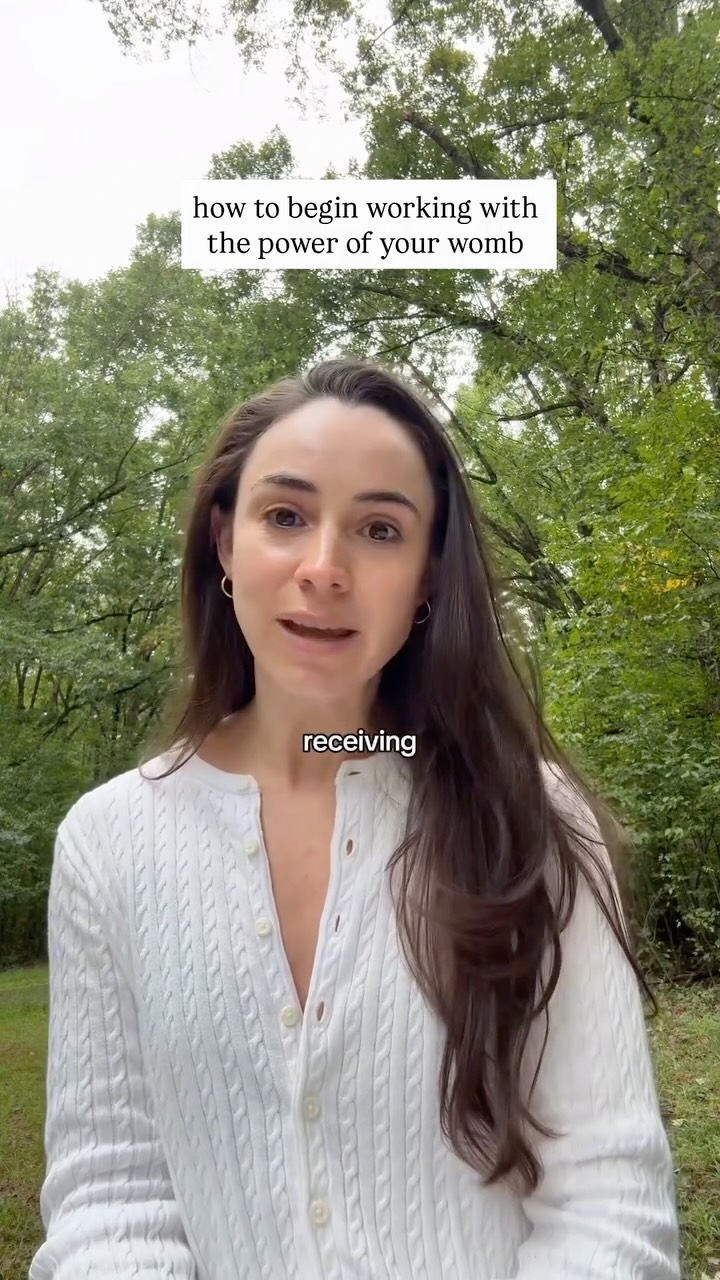 @primalhaley2.2KEvery time I talk about the power of the womb and how I use it to create my life, people always ask me, okay, like how do I start doing that? How do I connect with my womb?View breakdown
 @trincheralibre205.0K¿Esto es lo que defiende Bardem en Francia?View breakdown
 @kengo_book22.3Mむかつきませんか?View breakdown