@iam.carlaferreira's reel — transcript & breakdown
Plays
3.1K
Likes
39
Comments
4
Engagement Rate
1.41%
Create your own version
Use this post as inspiration to create your own
Audio
An upbeat, low-fi hip-hop beat playing in the background.
Caption
I used to think being sensitive was the problem. Especially in corporate. Especially in leadership. I thought I needed to be tougher. React less. Feel less. But that wasn’t the real issue. My sensitivity wasn’t the problem. My reactivity was. Once I learned how to pause, observe, and respond differently, sensitivity stopped feeling like a liability and started becoming one of my strengths. 5 things helped me most: 1. Wait 3 seconds before speaking. That pause gave me a choice: react or respond. 2. Observe before assuming. What I felt was often real, but my first interpretation wasn’t always the full story. 3. Ask more questions. Curiosity gave me information assumptions never could. 4. Get comfortable being wrong. Being open to another perspective made me more grounded, not weaker. 5. Let the conversation unfold. Not everything needs an immediate response. Sometimes clarity only comes with time. When I became less reactive, I didn’t become less sensitive. I became better at using my sensitivity. I noticed what wasn’t being said. I read the room better. I picked up tension earlier. I understood people and patterns faster. That made me a stronger leader. So if you’ve ever been called “too sensitive,” maybe sensitivity isn’t the thing you need to get rid of. Maybe you just need to learn how to use it without letting it run the show. Save this for the next time you feel yourself reacting. Follow @iam.carlaferreira for honest conversations about leaving corporate, reinventing yourself, and building a life that actually feels like yours.
Details
Create your own version
Use this video as inspiration to create a new script
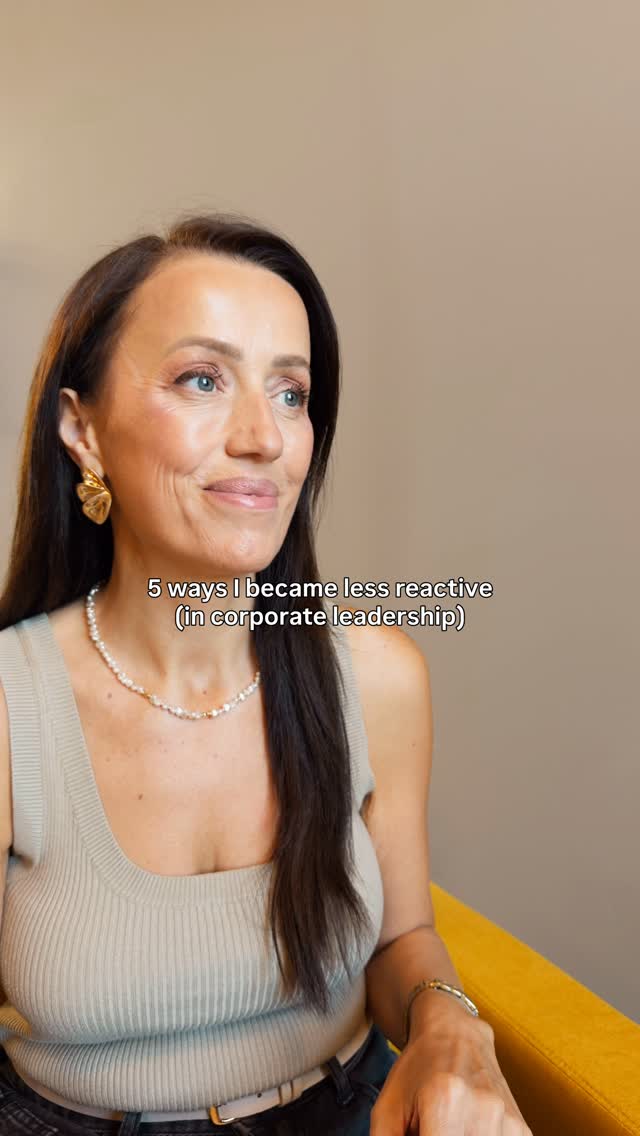
Hook
5 ways I became less reactive (in corporate leadership)
The title directly addresses a common professional challenge, immediately grabbing the attention of those in corporate leadership or aspiring to be.
Details
More from @iam.carlaferreira
View all
More viral reels, analyzed
 @megumi_kanzaki1.3M25歳をピークに毎年約1%ずつ減少しているコラーゲンView
 @culteapp3.1K40 MESSAGES POUR ORGANISER UNE RÉPÈTE ?View
 @rahul_.basavaraj831.3KSo, I make videos online which helps peopleView
 @clickbylakhan288.1KHello, editors. I'm giving you a normal video. You just need to do the color grading.View
 @ur.zarha2.4Mkisi aisi mainu Takya nighaan mainu Takya hoye dil sakeya geya pair de rakheya Mere dii rahiii Mere vass rahiiView
 @i5ubha274.4KSo, hello editor. My normal raw video de raha hoon. Aap log bas color grading karke dena. Jiska color grading badhiya hoga, bas usi ka collab hoga.View