@tonyrobbins's reel — transcript & breakdown
Plays
1.3M
Likes
46.4K
Comments
388
Engagement Rate
3.68%
Create your own version
Use this post as inspiration to create your own
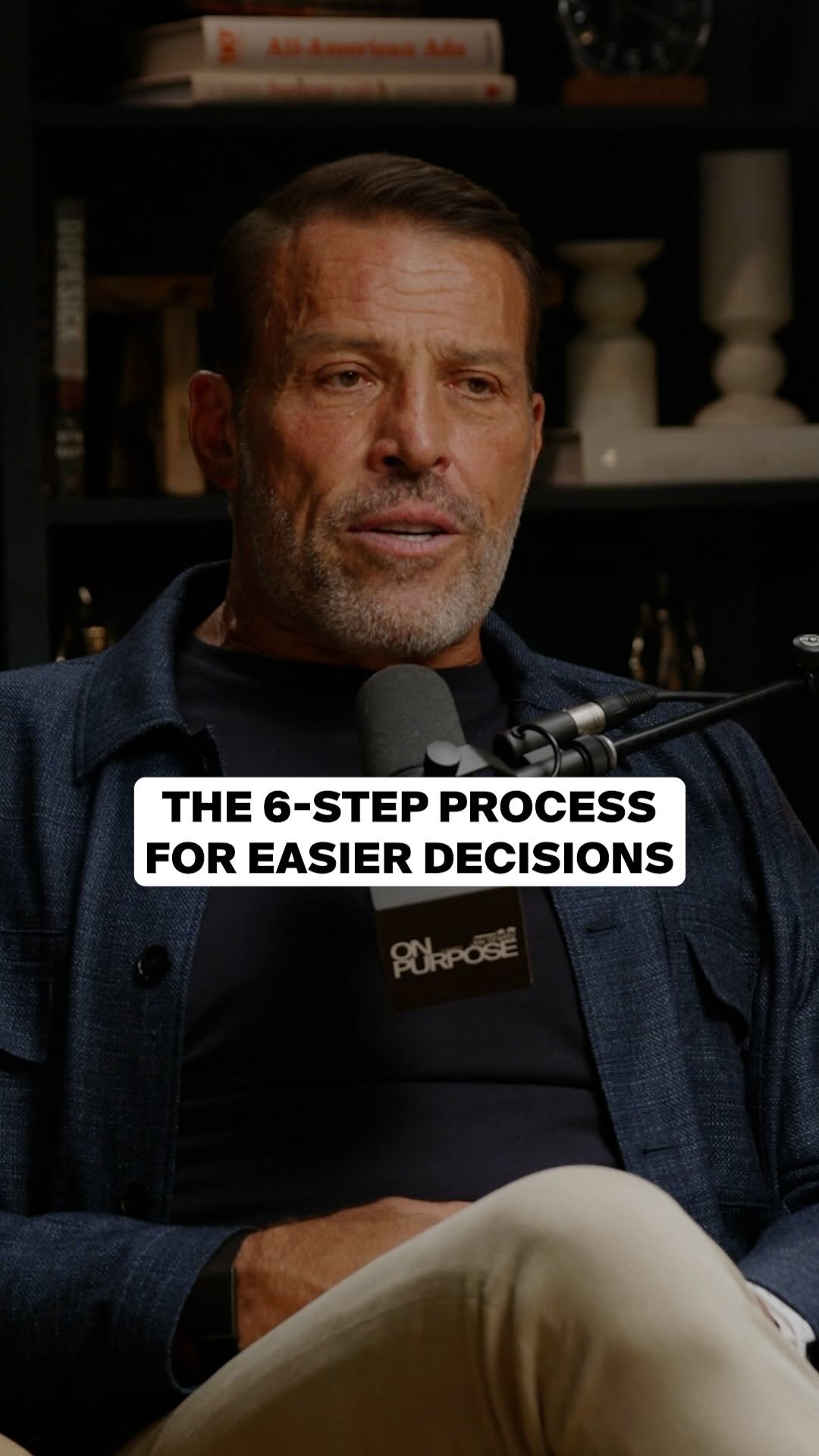
Audio
Subtle, calm instrumental music plays in the background throughout the video.
Caption
Early on in my career, I had one business and I was still figuring it out. The decisions in front of me felt like everything was on the line. I needed a model. Something that could make every call clearer, big or small. What I figured out: all decision-making is value clarification. It comes down to what’s most important to you. Two people can look at the same situation and make completely different calls. Both right. Because the answer always comes back to what you value most. Next time a decision doesn’t feel clear, run it through OOC-EMR. Podcast: @jayshettypodcast
Details
Create your own version
Use this video as inspiration to create a new script
Hook
I've made personally $400 million from one decision I made from this. I have a six-step process, and I call it OOC-EMR.
Tony Robbins opens with a strong, personal claim of making $400 million from one decision using this process, immediately grabbing attention and establishing credibility.
“I've made personally $400 million from one decision I made from this. I have a six-step process, and I call it OOC-EMR.”
He explains the origin of the process and the importance of objective decision-making, contrasting it with emotional approaches.
“I developed this way back then when I had a small business. I thought I should start with decision making, not by all the emotion that I may have of either anxiety or fear or excitement or passion. Either one can lead you astray.”
Tony breaks down the first part of his framework (OOC) – Outcomes, Options, and Consequences – emphasizing clarity, documentation, and rigorous thought.
“It's like, what do I want? What's the outcome? That's the first O. But start not with what you're afraid of, start with what you want. And I also say don't ever do this in your head, because you can't manage all in your head. So you write down the outcomes, and then you put them in order, and then you put the why. So now when you're crystal clear what you want and the order you want it in, and that's critical. What's number one? You got to be rigorous. Now you can make decisions by going to the second O, which is what are your options? Now you may not like them all, but you shouldn't lie to yourself and say this is the only option. That'll stress you out. So then I write out all the options. Then I go to OOC, is consequences, which is what you're doing the decisions for. What's the upside and the downside of each of these decisions to the best of my knowledge?”
He then introduces the final three steps (EMR) – Evaluate, Mitigate, and Resolve – focusing on assessing probability, finding solutions for downsides, and ultimately making a decision.
“Now we're going to go into the last three stages. I'm going to evaluate, mitigate, and resolve. E - evaluate. Now I'm going to evaluate what's the probability of those consequences? Because you might have something that's like, oh my God, if this happens, this is the worst thing on earth. But the probability is next to zero, and you're all stressed out. Unless you evaluate probability, you're wasting your time. You might have some go, oh my God, if this works out, it's going to be the greatest thing in the history of the world. But the likelihood of happening is zero. You can't let those extremes get you. So you gotta start to see by evaluating what's there. And then the last two steps are fast. It's mitigation. Mitigation means, okay, I've seen what I want, I know my options, I know the upside down, I know what's probable. Now, can I take something from this option and mix it with this one? Is there a way to mitigate the downsides? And almost always there are. And at this stage, your brain gets really creative because it's not in fear or uncertainty or anxiety, because you're not in your head, it's right in front of you. And the last part is resolve.”
A quick visual recap of the OOC-EMR acronym reinforces the learning and makes it memorable for viewers.
“O - Outcomes. O - Options. C - Consequences. E - Evaluate. M - Mitigate. R - Resolve.”
Tony reiterates his personal success with the method, providing powerful social proof that reinforces the value of his advice.
“I'd give you a million stories, but it's too late to do, but I can just tell you, I've made personally $400 million from one decision I made from this personally. I'm just I'm trying to give you an economic piece. What the spiritual, emotional value has been on things is priceless.”
Details
More viral reels, analyzed
 @tubaraomotiva920.3KUma coisa que eu tenho com Rebeca hoje, ela chega, ó, temos que conversar. A primeira pergunta que eu faço: é para resolver ou para ouvir?View
 @wantsandneedsbrand_269.3KPOV: you're late for work but your in the new Tesla roadsterView
 @indian_ai_funny137.0KWhen someone says something stupid and you have to fake a laugh.View
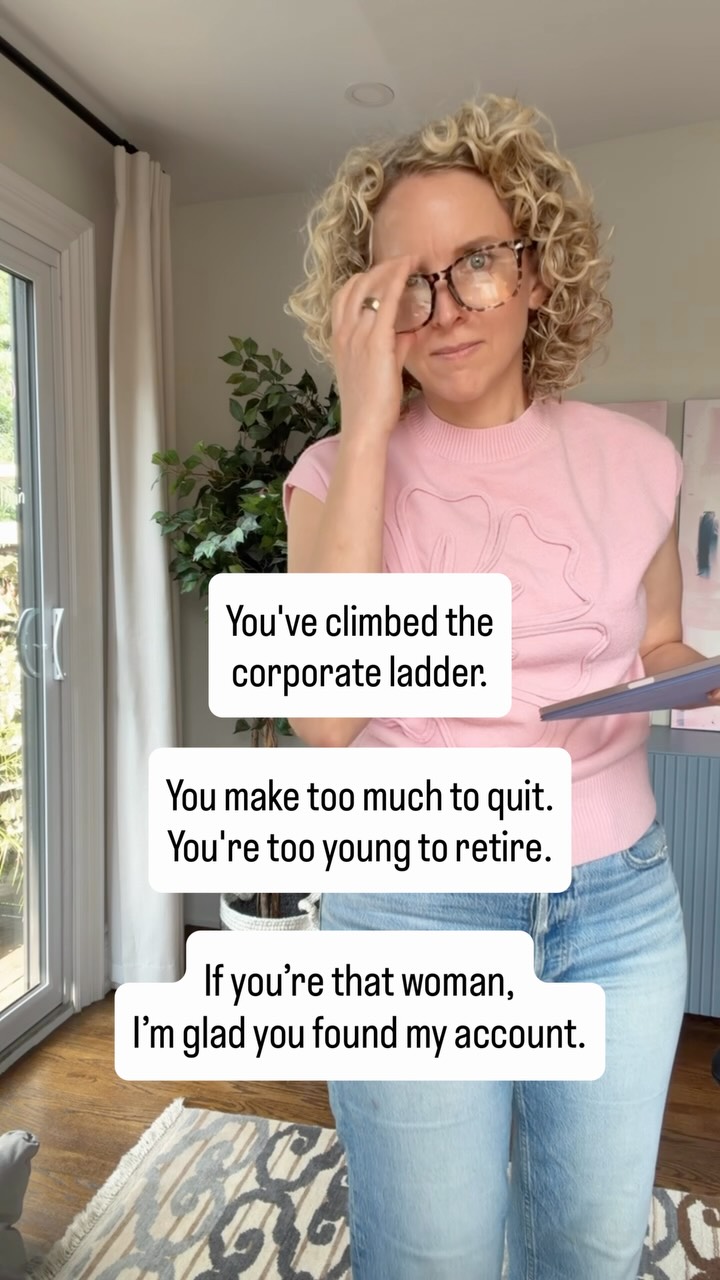 @thesarahjanzen381.0KYou've climbed the corporate ladder. You make too much to quit. You're too young to retire.View
 @jessijeanhome218.3KThis is a little jump scare warning. I am in my bikini and I'm in Vegas. I just got back from the pool and I need to warn you because I'm not in laundry.View
 @hybridfit.ayo26.9KHybrid Push DayView