How Often Should I Post Reels? The Honest Math (2026)
How often should you post Reels? The answer depends on one metric you're probably ignoring. Here's the framework that ties frequency to hook rate.
"Post consistently." That's what every article tells you. Not once do they define what consistently means for someone posting three mediocre Reels a week versus someone posting one sharp one. If you're asking how often should I post Reels and getting that answer back, the advice is useless. Worse, it's actively harmful if it's pushing you toward volume before you've solved quality.
So let me give you the honest math: how often you should post Reels depends on one number you probably aren't tracking, and I'll show you exactly how to find it.
TL;DR
The right Reels posting frequency isn't universal. It's determined by your hook rate (3-second views ÷ impressions). If your hook rate is below 40%, posting more does nothing except spread bad signals across more Reels. Hit 50%+ hook rate first, then scale to 3–5x per week for growth or 1–2x for maintenance. Full diagnostic below. See also: Hook Rate, Hold Rate, Completion Rate: The 3 Reel Metrics That Predict Reach and The Instagram Reels 2026 Playbook.
Why "be consistent" is the wrong answer
Consistency is a proxy metric. The real variable is signal quality, and the algorithm doesn't care how often you show up.
Here's how the distribution actually works: Instagram tests every new Reel on an audience of roughly 100 to 500 people. If around 60% of them swipe past within 1.5 seconds, the system reads that as a signal to stop pushing the video. More posts means more tests. More failed tests means more negative signals attached to your account over time.
Posting three times a week when your hook rate sits at 30% isn't consistency. It's three weekly reminders to the algorithm that your content doesn't hold attention.
The one number that should set your schedule
Hook rate. That's 3-second views divided by impressions, expressed as a percentage.
A hook rate above 50% means more than half the people the algorithm shows your Reel to actually stop scrolling. That's the benchmark where posting volume starts to matter, because each new Reel is entering the test queue with a demonstrated ability to pass the first gate.
Below 50%, and especially below 40%, more posting accelerates the problem. You're generating more data, but all of it says "swipe."
If you don't know your hook rate right now, check it before you plan any schedule. Go to your Reels insights in the Instagram app, pull your last 10 Reels, calculate 3-second views ÷ impressions for each one, and average them. That number is your current signal quality score.
The Frequency-First Framework (and how to apply it)
I call this the Frequency-First Framework because it inverts the usual advice. Instead of picking a calendar and hoping quality follows, you let your current metrics set the calendar, then you earn your way to a higher frequency.
There are four tiers:
| Hook Rate | What It Means | Recommended Frequency |
|---|---|---|
| Below 40% | Hook problem. Volume makes it worse. | 1x/week max. Fix hooks first. |
| 40–49% | Borderline. Some Reels work, some don't. | 2x/week. Test one hook style per post. |
| 50–59% | Healthy signal. Ready to scale carefully. | 3–4x/week. |
| 60%+ | Strong. Audience-content fit is tight. | 4–5x/week. Protect quality vigilantly. |
The tier you're in right now tells you your posting ceiling, not a target to reach through sheer output.
One thing I want to be specific about: these tiers apply to your average hook rate across your last 10 Reels, not your best single Reel. One viral video doesn't change your baseline.
What "fixing hooks first" actually looks like
If you're in the sub-40% tier, there's a concrete path out. It's not posting less and hoping things improve. It's running deliberate hook experiments while keeping volume low enough that each test gets clean signal.
Here's the exact workflow:
- Pull your last 10 Reels and sort them by hook rate, highest to lowest.
- Look at the top 3. What do they have in common in the first 1.5 seconds? Specific setting, direct camera address, a number on screen, a conflict setup?
- Look at the bottom 3. What pattern do those share? Slow zoom-ins, music-only openings, context-first intros?
- Write your next 4 Reels to replicate the structural element from your top 3. Not the topic — the structure.
- Post one per week for 4 weeks. After each post, check hook rate within 48 hours. If it climbs, you've found your pattern. If it doesn't, swap the structural element and repeat.
That's 4 weeks of controlled experiments at 1x/week frequency. It's slower than "post every day," but it generates actual diagnostic data instead of noise.
For a deeper look at what makes hooks structurally work, the six hook patterns that drive Reels reach are worth bookmarking before you write your next batch.
How goals change the target frequency
Hook rate sets your ceiling. Your goal sets where you operate within it.
If you're trying to grow fast: You want to be posting at the top of your hook-rate tier, which means you need to actively maintain quality as you increase volume. Most creators who jump from 1x to 5x per week without a content system watch their hook rate drop within two weeks. The content gets thinner. The hooks get lazier.
If you're trying to maintain a current audience while doing other things: 1 to 2 Reels per week at solid quality is enough. Instagram doesn't punish reduced frequency the way people think. What it penalizes is a sudden drop to zero for 2 to 3 weeks, then a burst of low-quality posts to "catch up."
If you're building a content library and testing hooks systematically: 2 to 3 times per week is the sweet spot. You're generating enough variation to learn, but not so much that production quality suffers.
If you're posting below your hook-rate tier's ceiling: You're leaving reach on the table, but that's a far better problem than posting above it.
The burnout trap disguised as a strategy
Here's the thing: most burnout doesn't come from posting too often. It comes from posting often without feedback loops. You're producing, producing, producing, and none of it seems to work, and you have no idea why.
The fix isn't fewer posts. It's fewer posts with a specific diagnostic purpose. That's what the Frequency-First Framework does. Every Reel you post inside this system is either confirming a hook pattern or eliminating one. That makes the work feel less arbitrary, which makes it sustainable.
If your Reels keep stalling at a few hundred views despite decent frequency, the Instagram Reels Stuck at 200 Views fix path walks through the likely culprits in sequence.
What to track besides hook rate
Once you're in the 50%+ hook rate range and ready to scale frequency, two other numbers become critical.
Hold rate is average watch time divided by video length. For Reels under 15 seconds, 50%+ is the target. For Reels 30 seconds or longer, 30%+ is the floor. If your hook rate is strong but your hold rate is weak, people are stopping for the hook and leaving before the payoff. That's a scripting problem, not a frequency problem.
Completion rate tells you whether viewers are watching all the way through, which carries weight in the algorithm's second-stage expansion decision. You want this above 25% as a minimum for short-form content.
Both of these metrics interact with frequency in a direct way: as you post more, you can't sustain quality across all three metrics without a repeatable content system. That's the constraint posting advice never addresses.
The 30-Day Instagram Reels Content Calendar is built around this constraint specifically. It maps hook patterns to days so quality doesn't collapse when you scale.
Frequently asked questions
How often should I post Reels to grow from 0 to 10k followers?
Start at 2x per week and prioritize hook rate over volume. Once your average hook rate crosses 50% across at least 8 Reels, move to 3 to 4 times per week. Growing an account by posting 7x/week with a 30% hook rate almost always stalls around the 500 to 2,000 follower range.
Does posting more Reels hurt your account?
Not directly, but posting more low-performing Reels creates a pattern of negative signals that makes it harder for future Reels to get initial distribution. The algorithm uses your recent performance history when deciding how large a test audience to give each new post.
Is it better to post 1 high-quality Reel or 3 average ones per week?
One strong Reel, every time. A single Reel with a 60%+ hook rate and a 40% hold rate will generate more cumulative reach than three Reels averaging 28% hook rate. Volume is only an advantage when quality is already consistent.
What happens if I miss a week of posting?
Missing one week doesn't meaningfully damage your account. Missing 3 or more consecutive weeks can reduce the algorithm's familiarity signals and slightly shrink your initial test audience size. Resume with a strong hook on your first post back, not an apology-style "I'm back" Reel.
How do I know if my posting frequency is too high right now?
Check your last 8 Reels. If hook rate is trending downward over time (not just one outlier), you're likely posting past your quality ceiling. Pull back by one post per week and focus on the hook structure of your next batch before resuming the higher cadence.
The "post consistently" advice isn't wrong. It's just incomplete. Consistency matters after you've built a hook rate worth repeating. Until then, the most productive thing you can do is post less, learn faster, and earn the right to scale.
CreatorHouse automates exactly the part of this process that takes the most time: identifying which hook patterns are actually working in your niche, by pulling competitor Reels, transcribing them, and extracting what's structurally driving their top performers. That's the feedback loop that makes the Frequency-First Framework fast instead of slow.
Read more
Stop Guessing. Start Winning: Why CreatorHouse is the vidIQ for Instagram
Most Instagram creators are running a content lottery. Here's the vidIQ-style playbook for reverse-engineering viral Reels in five minutes.
Hook Rate, Hold Rate, Completion Rate: The 3 Reel Metrics That Predict Reach in 2026
Hook rate, hold rate, completion rate: the 3 metrics that predict Reel reach in 2026. The formulas, the niche benchmarks, and the order to diagnose.
Average Engagement Rate on Instagram (12,505 Reels, 2026)
Across 12,505 Reels, the average engagement rate on Instagram falls from 5.2% under 10K followers to 0.21% past 1M. Likes per view barely move.
Real reels, analyzed
See the full transcript, hook, and shot-by-shot breakdown behind viral reels — then turn any of them into your own script.
 @kengo_book22.3Mむかつきませんか?View breakdown
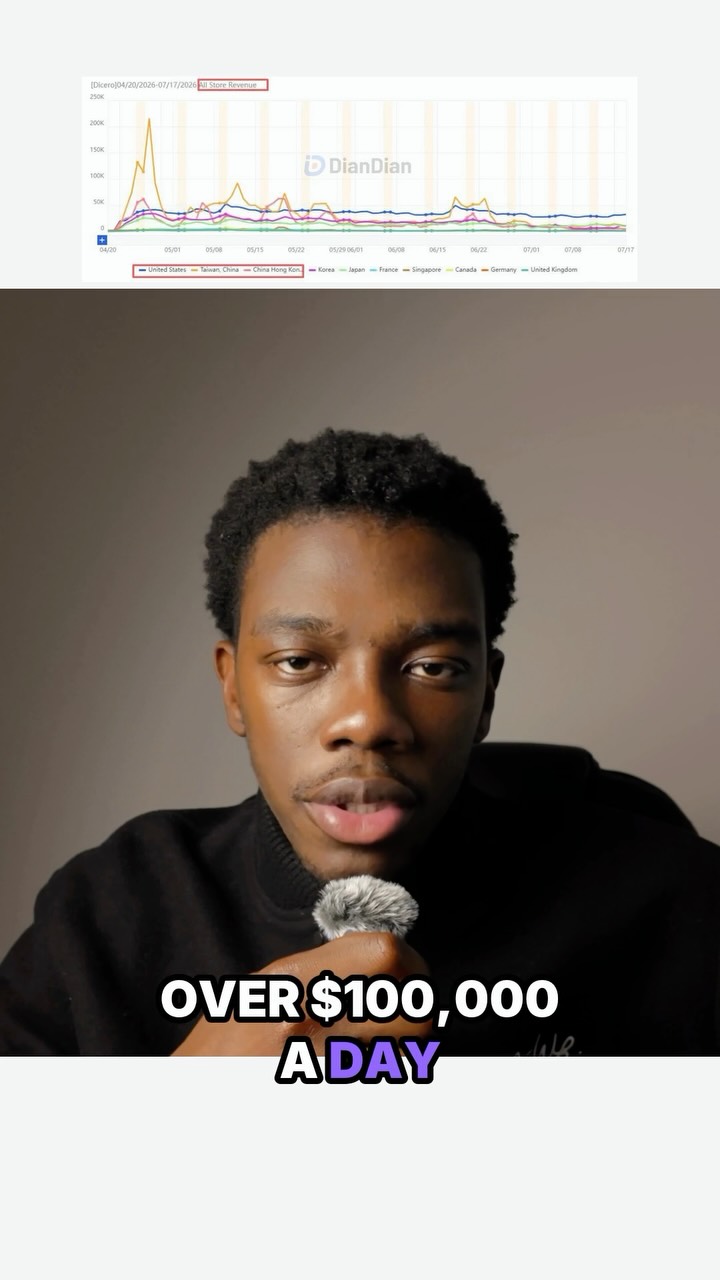 @ayoships238.1KSo I used AI to reverse engineer a mobile app that's making over $100,000 a day.View breakdown
 @myrongolden6.8M99% of you are broke because you waste most of your money buying stuff, as opposed to those of us who are rich. We're rich because we use most of our money to acquire assets that make us more money.View breakdown