Transcript of @drmarkhyman's reel
DXKdnJojyNx
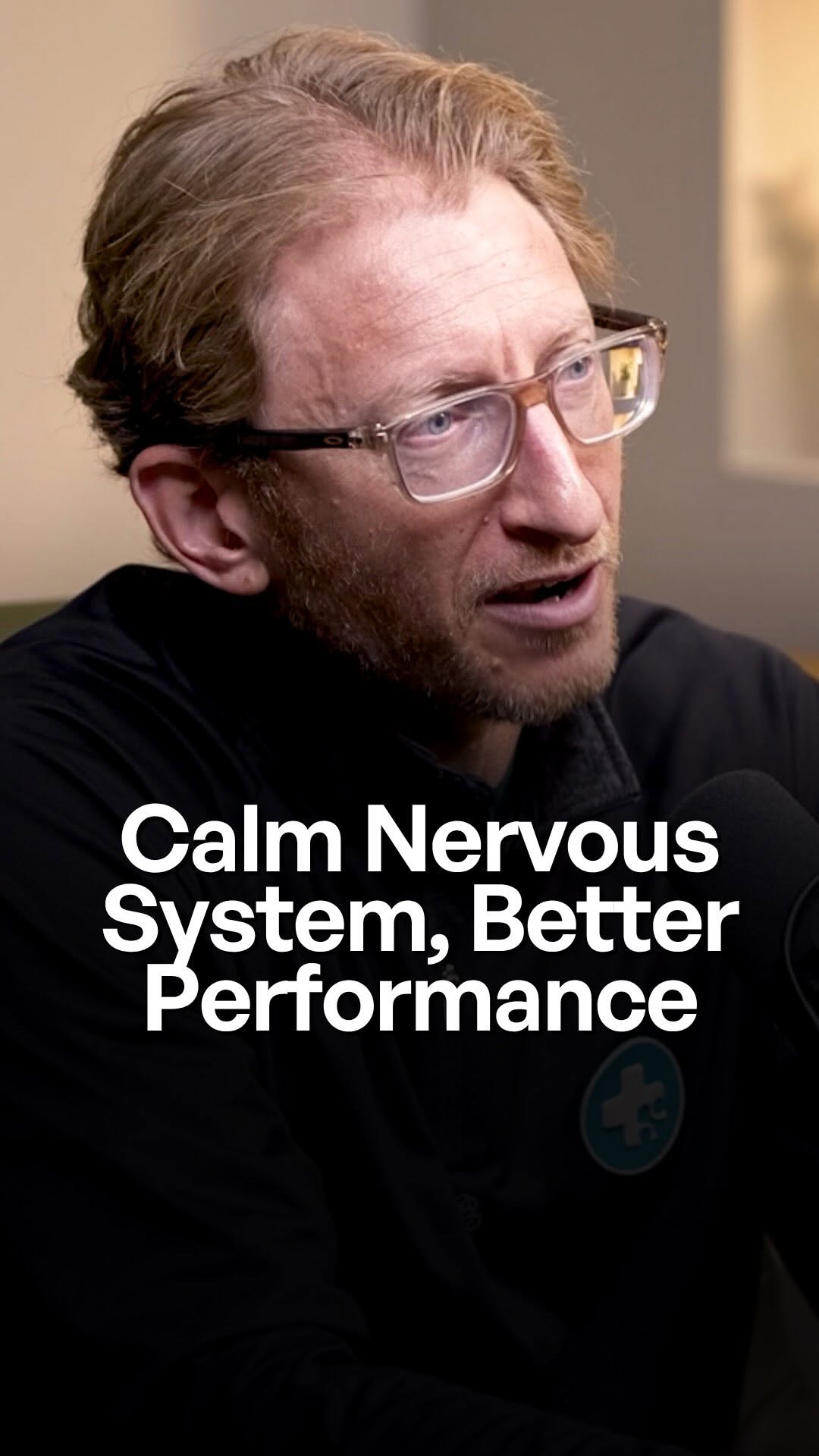
What if peak performance isn’t about pushing harder, but learning how to calm down? At the highest levels, from Olympic athletes to Navy SEALs, performance doesn’t come from staying in fight-or-flight. @drscottsherr physician specializing in mitochondrial health and nervous system regulation, explains how the real edge comes from operating just below that threshold, where the brain is focused, clear, and efficient. Push too far, and you lose access to memory, clarity, and control. Stay regulated, and your body can actually perform and recover at a higher level. In this episode, we break down how your nervous system shapes your performance, and why downregulation is the missing piece for so many people. Resilience is built in recovery. 💪 🎧 Episode is out now. Drop a YES below and I’ll DM you the link to listen!
This is the parasympathetic edge.
Envie de voir les mots qui rendent cette accroche virale ?
Inscription gratuite pour voir les mots-clés qui font le travail + 50+ accroches similaires de votre niche.
This is the parasympathetic edge. I have a friend of mine, he's the only Olympic skier and former wide receiver on the Philadelphia Eagles. He told me when he first started doing his competitions, he would listen to like Metallica and like hard metal. But by the time he was Olympic level, he was listening to Mozart and Beethoven. Why? He didn't need his nervous system to be functioning at a sympathetic level. He needed to drop down just a little bit to find that edge so that he was right in there. And you talk about people that are high performers. They are not in sympathetic overload. They are just below that in a place where they can maintain their capacity. Navy Seals are famous for this, right? When they're actually in operations. They're not sympathetically dominant. They've done training so much, like a Michael Phelps is a great example of this, too, right? You've trained so much for every eventuality that nothing is going to make your nervous system go too high. Because if it goes too high, we can't function that high. We don't do well. And this is where the classic example is like you have that dream where you're supposed to give a speech and you can't remember your lines. Because when your nervous sympathetic nervous system is so high, you actually lose blood flow to the front of your brain, which is where you have what's called your executive function. Your capacity to maintain things, your long-term memory. Like, you go blank. That sympathetic activation. And so we want to have people learn is that when we downregulate the nervous system, you're going to function better than you're even thinking that you're functioning at a higher capacity when you're at sympathetic dominance. Because when you teach people that you can bring people down and have them function at a better level, it is like night and day.
Transformez ce reel en votre propre script
Remixez l'accroche avec l'IA dans votre voix — prêt à tourner en quelques minutes.
"This is the parasympathetic edge. I have a friend of mine, he's the only Olympic skier and former wide receiver on the Philadelphia Eagles. He told me when he first started doing his competitions, he would listen to like Metallica and like hard metal. But by the time he was Olympic level, he was listening to Mozart and Beethoven. Why? He didn't need his nervous system to be functioning at a sympathetic level. He needed to drop down just a little bit to find that edge so that he was right in there. And you talk about people that are high performers. They are not in sympathetic overload. They are just below that in a place where they can maintain their capacity. Navy Seals are famous for this, right? When they're actually in operations. They're not sympathetically dominant. They've done training so much, like a Michael Phelps is a great example of this, too, right? You've trained so much for every eventuality that nothing is going to make your nervous system go too high. Because if it goes too high, we can't function that high. We don't do well. And this is where the classic example is like you have that dream where you're supposed to give a speech and you can't remember your lines. Because when your nervous sympathetic nervous system is so high, you actually lose blood flow to the front of your brain, which is where you have what's called your executive function. Your capacity to maintain things, your long-term memory. Like, you go blank. That sympathetic activation. And so we want to have people learn is that when we downregulate the nervous system, you're going to function better than you're even thinking that you're functioning at a higher capacity when you're at sympathetic dominance. Because when you teach people that you can bring people down and have them function at a better level, it is like night and day."
[VISUAL: A man with glasses and a beard, wearing a black jacket with a white and blue logo, speaks into a microphone. Another man, with a beard and a light jacket, listens intently.]
[AUDIO: Calm ambient background music with piano.]
The speaker immediately introduces a key concept, 'parasympathetic edge,' drawing the audience in with a term that implies advanced performance.
“This is the parasympathetic edge.”
The speaker uses a compelling anecdote about an Olympic skier and former NFL player to illustrate his point about optimizing nervous system states for peak performance.
“I have a friend of mine, he's the only Olympic skier and former wide receiver on the Philadelphia Eagles. He told me when he first started doing his competitions, he would listen to like Metallica and like hard metal. But by the time he was Olympic level, he was listening to Mozart and Beethoven. Why? He didn't need his nervous system to be functioning at a sympathetic level. He needed to drop down just a little bit to find that edge so that he was right in there.”
He validates the concept by referencing other high-performers like Navy Seals and Michael Phelps, reinforcing the idea's broad applicability.
“And you talk about people that are high performers. They are not in sympathetic overload. They are just below that in a place where they can maintain their capacity. Navy Seals are famous for this, right? When they're actually in operations. They're not sympathetically dominant. They've done training so much, like a Michael Phelps is a great example of this, too, right?”
The speaker explains the negative impact of sympathetic overload using a relatable example of forgetting lines during a speech, connecting physiological state to everyday struggles.
“You've trained so much for every eventuality that nothing is going to make your nervous system go too high. Because if it goes too high, we can't function that high. We don't do well. And this is where the classic example is like you have that dream where you're supposed to give a speech and you can't remember your lines. Because when your nervous sympathetic nervous system is so high, you actually lose blood flow to the front of your brain, which is where you have what's called your executive function. Your capacity to maintain things, your long-term memory. Like, you go blank.”
He summarizes the core message: downregulating the nervous system leads to better function, providing a clear takeaway for the audience.
“That sympathetic activation. And so we want to have people learn is that when we downregulate the nervous system, you're going to function better than you're even thinking that you're functioning at a higher capacity when you're at sympathetic dominance. Because when you teach people that you can bring people down and have them function at a better level, it is like night and day.”
- Genre
- Ambient
- Mood
- Calm
- Tempo
- Slow
- Type
- trending_sound
A very subtle, calm, and slow ambient background music with piano elements.
Trouvez plus de reels comme celui-ci dans votre niche
Suivez vos concurrents et voyez ce qui marche vraiment — mis à jour chaque jour.
CreatorHouse transcrit, analyse et remixe le contenu de vos concurrents et de votre bibliothèque — tout dans un même espace.